Ostia Antica Day Trip from Rome: The Closer Rival to Pompeii
We earn a commission when you book through our links on Viator (PID P00299531), at no extra cost to you. This is how we keep the site free. Learn more →
Rome has two excavated Roman towns within reach of a day out, and only one of them sits on a commuter line. This page sets the short train from Porta San Paolo against the longer Pompeii rail route, then looks at the two guided options I would consider for an Ostia Antica day trip from Rome.
I Didn't Expect Ostia Antica to Feel Like This
An Ostia Antica day trip from Rome suits travellers short on time who want a whole Roman town without a long rail journey. Ostia Antica is 30km from Rome. Train from Porta San Paolo takes 30 minutes. The ancient port city is larger and less crowded than Pompeii.
Before you leave, check the regional transport guidance on Turismo Roma, because a commuter line can change its timetable without telling anyone who writes about it.
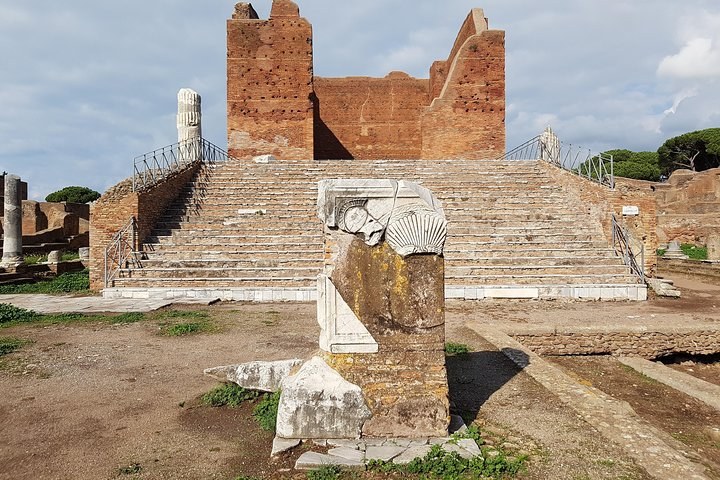
What caught me off guard was the silence. In late spring 2022, I boarded at Porta San Paolo with a cornetto still warm in its paper bag and was walking the Decumanus Maximus before the grease spot showed through. Umbrella pines hissed overhead, lizards poured off the brickwork, and I had an entire street of tombs to myself. I had braced for a Roman site with Roman crowds. Instead I got a pastry, a short ride and a street of the dead with nobody else on it.
Ostia Antica is on a commuter rail line, not a tour circuit, so an early weekday start can give you a whole Roman town in near silence.
This is not the trip for someone whose heart is set on Pompeii itself.
Ostia Antica Semi Private Tour from Rome: The Tour That Saved My Trip
The Ostia Antica Semi Private Tour from Rome is built for the traveller who has one spare day and no interest in working out a commuter platform on their own. The listing describes a semi private tour from Rome to the excavated remains of ancient Rome's port city, where streets, houses and public buildings still stand.
You get a guide to explain what the shops, houses and public buildings were for, without the pace of a large coach party. The title does not say how you travel from Rome, so read the listing for the transport arrangement and the meeting point before you commit.
Pass on this one if you like to linger at a single doorway for as long as you please.

Ostia Antica Semi Private Tour from Rome
From $92.01 · Price checked: Sep 2026
Best for: Travellers who want to walk through a preserved Roman town outside the city in a semi private group.
Not for: Skip it if a half day on uneven ancient paving and open ruins would be hard going.
A semi private tour from Rome to Ostia Antica, the excavated remains of ancient Rome's port city, where streets, houses and public buildings still stand.
Check availabilityExternal booking on Viator · pricing and cancellations handled by Viator
The Moments That Made Roman ruins within easy reach in Ostia Antica Worth the Trip
The moments that make Ostia worth the train fare come from walking real streets through a working port town, with houses and public buildings still standing on either side.
I understood the difference because of Rome itself. In late September 2021, walking the Centro Storico, Rome arrived as a smell first: warm stone, exhaust, and coffee drifting from a doorway near the Pantheon. I stepped down into a church and its floor was centuries older than the street outside. Sampietrini cobbles rolled under my soles all day. The layers were there, but I had to go down a staircase to find each one.
Ostia removes the staircase. The layers are the street.
Rome's historic centre is compact but hard on feet, because the cobbles punish thin soles and wheeled luggage.
Skip Ostia if what you want from a day out of Rome is a long lunch with a view and very little walking.
Ancient Ostia Antica Semi-Private Day Trip from Rome by Train with Guide: A Lesser-Known Tour Worth Discovering
The Ancient Ostia Antica Semi-Private Day Trip from Rome by Train with Guide states its method in the title: you travel by train, with a guide, in a small shared group. It keeps the commuter-rail character of the trip, which is exactly what makes Ostia quieter, while someone else handles the ticketing and the platform.
Reaching a Roman town by train with someone who knows which street you are standing on is a sensible use of a short stay in Rome, and it gives nervous first-timers the local line without the guesswork.
This option is wrong for anyone set on a private tour or a car transfer.

Ancient Ostia Antica Semi-Private Day Trip from Rome by Train with Guide
From $57.07 · Price checked: Sep 2026
Best for: Travellers who want to walk the streets of a preserved Roman town, reached from Rome by train with a guide.
Not for: Skip it if you want a guide to yourself, as this trip is shared with a few other travellers.
A guided trip from Rome to Ostia Antica by train in a small shared group, exploring the excavated remains of ancient Rome's port city.
Check availabilityExternal booking on Viator · pricing and cancellations handled by Viator
What Surprised Me About Ostia Antica
What surprised me was how much of the Pompeii comparison comes down to the rail journey, not the ruins. Ostia is one short commuter ride from the city. Pompeii needs a high-speed train south and then a local connection, and every transfer adds a place where your day can slip.
Here is the Pompeii side in plain figures. The fast train from Roma Termini to Napoli Centrale takes 1 hour 10 minutes on Frecciarossa. From Napoli, the Circumvesuviana local train to Pompei Scavi takes another 35 minutes.
To be fair to Pompeii, the site is enormous. Pompeii covers 66 hectares, and roughly two-thirds has been excavated. My full breakdown is in the Pompeii day trip from Rome page, and the Pompeii site guide covers the ground once you are there.
My opinion is simple. If you have a single loose day in Rome and no fixed wish to see Pompeii, the shorter journey wins, because the train time you save becomes time on the streets.
Ostia is a poor fit for travellers who measure a day trip by fame.
Marco Bellini's Insider Tips for Getting It Right
Getting Ostia right comes down to three habits: go early on a weekday, carry water you can refill, and wear shoes that can handle a long day on old stone. Check current services on Turismo Roma the evening before.
Water first. In deep summer 2024, walking Trastevere and the Aventine, by noon the heat came off the walls in sheets and my shirt was stuck to my back. Then I found a nasone, one of the cast-iron street fountains, and drank straight from the cold arc with my thumb over the spout like everyone else. That fountain changed how I plan a Roman summer day.
The habit is easy to copy. Carry an empty bottle and fill it at Rome's public nasoni before you head for Porta San Paolo. In summer, sightsee early, rest through the afternoon and go back out after sunset. For Ostia, that means catching the morning train, not a lunchtime one, and being back in the city before the afternoon heat sets in.
Because Ostia runs on a commuter line, the quiet belongs to whoever arrives early.
A midday start in high summer is a bad plan for anyone who wilts in heat. More city-wide advice sits in my Rome travel tips, and the wider Rome day trips hub lists the other routes out of the city.
What I Wish I'd Known Before I Went
What I wish I had known is that small-station problems get solved locally, not in guidebooks. Before booking, check how each tour gets you from Rome, where it meets, and whether your day of travel suits a commuter service.
I learned the local-fix lesson in Orvieto, not Ostia. In September 2022, I stepped off the train from Rome at a station tucked under the cliff. The funicular ticket machine was broken. The man at the bar next door sold me a funicular ticket from behind the counter at the same price. No guidebook I had read mentioned this. The wider lesson for any regional trip out of Rome is to look around the station before you assume you are stuck.
Here is my checklist for Ostia. Confirm whether your tour includes the train; the Ancient Ostia Antica listing says so in its title, the Semi Private Tour does not. Pack the refillable bottle and the real shoes. Pick a weekday if your dates allow it.
As for tours to avoid, I would pass on any itinerary that tries to fold Ostia and a second town into the same day. If Ostia is done and you want another short regional escape, look at my other short day trip from Rome.
Bundles are the wrong choice for the traveller who treats a day trip as a box to tick.
Explore More
Related comparisons and guides:
Frequently Asked Questions
Is Ostia Antica worth it if I have already seen the Roman Forum?
Yes, because Ostia shows you a complete port town with streets, houses and public buildings, where the Forum shows you the civic core of the capital.
Can I visit Ostia Antica without a guide?
You can, since the site sits on a commuter line from Porta San Paolo that you can ride independently. A guide earns their fee by explaining which building you are looking at, which the ruins will not tell you on their own.
Which of the two Ostia tours should I pick?
Pick the Ancient Ostia Antica Semi-Private Day Trip if you specifically want to travel by train with your guide. Read the Ostia Antica Semi Private Tour listing for its transport and meeting details, because its title does not state them.
Should I choose Ostia Antica or Pompeii for a single free day?
Choose Ostia if you want more hours on the ground and fewer connections. Choose Pompeii if seeing that particular site is the reason you came to Italy.
What should I bring for a summer visit?
Bring an empty bottle to fill at a Roman nasone before you leave the city, plus shoes with proper soles.
Written from Rome, Italy.