Rome or Florence: How to Choose, and How to See Both
We earn a commission when you book through our links on Viator (PID P00299531), at no extra cost to you. This is how we keep the site free. Learn more →
I Did Both Rome and Florence. Here's What Nobody Tells You
You do not have to pick between Rome and Florence. Rome works as a base and Florence works as a day trip, because the high-speed line between them changes the question from "which city" to "which mornings go where". I am a Roman and I am biased, so weigh that.
According to Trenitalia, whose timetables you should check for your own date: Italy's Frecciarossa high-speed trains now hit 300km/h on the Rome-Florence corridor, making a day trip from Rome to Florence a 90-minute journey each way.
I boarded the Frecciarossa at Termini and watched green hills blur past while the trolley rattled with coffee cups. That ride changed how I plan Italy for friends.
This plan does not suit everyone. If you have only one full day in Italy, forget the train and stay in whichever city you landed in. And if Florence is the whole reason you came, with Renaissance art as the point of the trip, base yourself there and treat Rome as the side trip. My bias toward Rome should not overrule your reason for travelling.
Colosseum & Forum with Optional Arena or Underground Access: The Experience
The Colosseum is the Rome morning I would protect first, and it rewards planning more than it rewards luck. The Colosseum receives 7 million visitors annually. Book skip-the-line tickets 30 days in advance for morning entry slots.
I tested the Colosseum at opening one morning and the Vatican the next, and the contrast taught me what to prebook. At the Colosseum, timed entry moved briskly through the security arches, while outside the Vatican walls an unticketed line snaked along the pavement, smelling of sunscreen and espresso. The Colosseum with a timed slot felt orderly. The Vatican without one looked like a punishment.
The Colosseum & Forum with Optional Arena or Underground Access tour pairs the amphitheatre with the Roman Forum and lets you upgrade to the arena floor or the underground chambers beneath it. If the underground levels tempt you, my Colosseum underground guide explains what that access involves before you pay for the upgrade.
Skip the upgrade if you are travelling with small children who will not care about arena floors, or if this is your third visit and the Forum ruins already bore you.
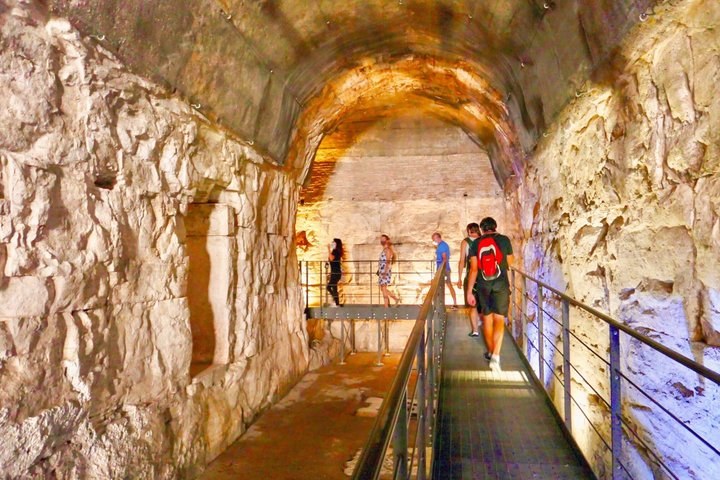
Colosseum & Forum with Optional Arena or Underground Access
From $115.30 · Price checked: Sep 2026
Best for: Travellers who want the Colosseum and Forum together, with the choice to upgrade to the arena or underground levels.
Not for: Travellers with limited mobility, as the Forum means walking outdoors over uneven ancient paving.
A visit to the Colosseum and the Roman Forum, with the option to add access to the arena floor or the underground chambers beneath it.
Check availabilityExternal booking on Viator · pricing and cancellations handled by Viator
Why Rome Nearly Won Me Over
Rome wins on walking. In Rome I heard tram bells mostly around Trastevere, and the hills felt like gentle rises between ruins. For a traveller who wants to wander without effort, Rome is the kinder city, and that is my opinion as someone who lives here and still gets lost on purpose.
Rome's weakness is scale. My Rome guide splits the city into days that do not fight each other, and the Rome hub collects the day-trip options that start from here. Turismo Roma, the city's official tourism portal, lists attractions, booking portals and regional transport guidance, and it is worth reading before you commit to any ticket.
Skip the line Vatican Museums, Sistine Chapel and St Peters Tour: The Experience
This tour belongs in a Florence discussion for one reason: it is the Rome morning you trade away if you spend a day on the train north.
The Vatican Museums publish admission rules, ticket types and opening hours, and the scale is the first thing to plan for. The Vatican Museums cover 7km of galleries. The shortest route from entrance to Sistine Chapel is roughly 1.5km of walking through 6 galleries.
The Skip the line Vatican Museums, Sistine Chapel and St Peters Tour covers the museums, the chapel and St Peter's Basilica in one visit. The line I saw outside the walls convinced me that a timed, prebooked entry is not optional here. If you are weighing this against the Colosseum for a single free morning, my Colosseum vs Vatican comparison sets the two side by side.
Skip this format if you have visited before and only want the Sistine Chapel.
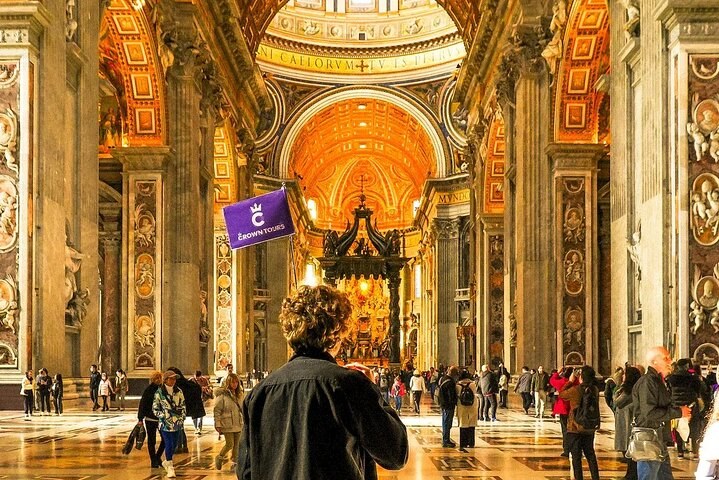
Skip the line Vatican Museums, Sistine Chapel and St Peters Tour
From $20.96 · Price checked: Sep 2026
Best for: First time visitors to Rome who want the Vatican Museums, Sistine Chapel and St Peter's covered in one visit.
Not for: Skip it if you want to wander the Vatican galleries alone and linger at your own pace.
A skip the line tour of the Vatican Museums, the Sistine Chapel and St Peter's Basilica in Vatican City.
Check availabilityExternal booking on Viator · pricing and cancellations handled by Viator
The Moment I Made My Decision
My verdict is Rome as the base and Florence as a planned day trip, not a second hotel. The part that decided it for me was the arrival at Santa Maria Novella.
Santa Maria Novella spilled me into a crush of rolling bags, and I had to jog to make my Uffizi time slot. Nothing about the train had gone wrong. Afterwards I ate a lampredotto panino standing at a bar counter, elbows on cool marble, paying far less than the seated price. That lunch told me what a Florence day should feel like. It should be quick, on foot, and built around one or two fixed points.
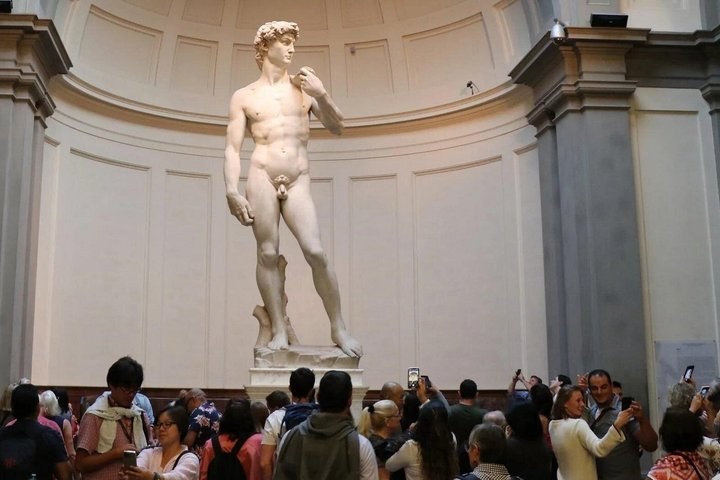
Two tours in this brief make that day for you, and they suit different travellers. Florence and Pisa from Rome: Enjoy a Full Day Small Group Tour takes a small group from Rome to Florence for Michelangelo's David at the Accademia, then adds a short stop in Pisa to see the Leaning Tower from outside. My own judgement: two cities in one day is the kind of itinerary I warn people about, and a short stop to view a tower from outside is a photograph, not a visit. Skip this one if Florence itself is your priority.
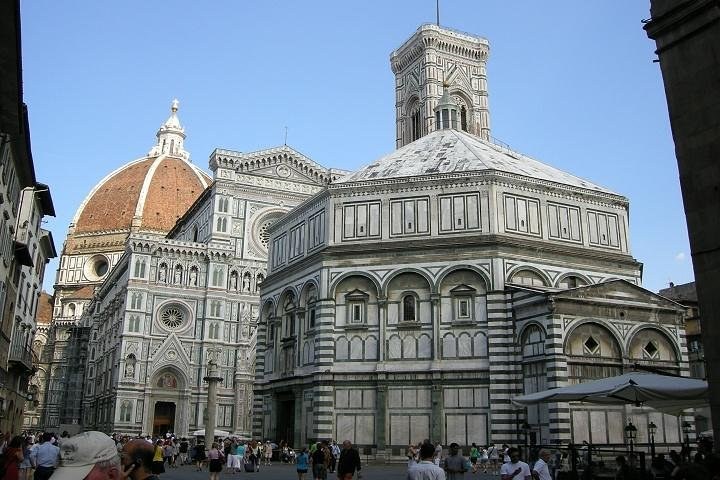
Florence and Pisa from Rome: Enjoy a Full Day Small Group Tour
From $335.41 · Price checked: Sep 2026
Best for: Travellers based in Rome who want to see the David and the Leaning Tower in one long day with a small group.
Not for: Skip it if this is your first time in Florence and you can stay overnight, as the city gets limited time here.
A small group full day tour from Rome to Florence, with a visit to Michelangelo's David at the Accademia, plus a short stop in Pisa to see the Leaning Tower from outside.
Check availabilityExternal booking on Viator · pricing and cancellations handled by Viator
Rome to Florence & Tuscany by High-Speed Train & Winery Tasting uses the same Frecciarossa corridor, then continues into the Tuscan countryside for a winery tasting. That suits a traveller who wants Florence and a glass of Tuscan wine without renting a car. Skip the winery day if nobody in your group drinks, or if you would spend the countryside hours wishing you were in a Florentine gallery.

Rome to Florence & Tuscany by High-Speed Train & Winery Tasting
From $299 · Price checked: Sep 2026
Best for: Travellers in Rome who want Florence and a taste of Tuscan wine in one day without driving.
Not for: Skip it if you do not drink wine, or if you would rather give Florence a full day of its own.
A day trip from Rome to Florence by high speed train, continuing into the Tuscan countryside for a winery tasting.
Check availabilityExternal booking on Viator · pricing and cancellations handled by Viator
What I Wish I'd Known Before I Went
The mistakes that cost me were small and avoidable: a missing buffer before a museum slot, a lingering snack before the last metro, and walk-up queues I could have skipped.
The late arrival lesson came in Rome, not Florence. I stepped off a late train into Termini and met a wall of people fighting for buses outside, diesel fumes hanging over the piazza. I retreated to a platform kiosk for a slice of potato pizza, still warm and salty, and lingered. The last metro left while I chewed, and I ended up on a sweaty night bus instead. Buy the pizza once your ride home is sorted.
Here is what I check before booking anything on this route:
- Prebook the Vatican with a timed slot.
- Give the Colosseum and the Vatican separate mornings.
- Leave a generous gap between your Frecciarossa arrival and any Florence museum slot.
- Confirm your train on Trenitalia for your exact date before you book a timed Florence entry around it.
- Check whether each site needs advance booking.
- Budget the whole trip before you choose tours. My Rome costs page breaks down where the money goes.
Explore More
Related comparisons and guides:
Frequently Asked Questions
Should I stay in Rome or Florence if I want to see both?
Stay in Rome and visit Florence as a day trip, because one hotel spares you a checkout day.
Which Rome station do Florence trains leave from?
I took the Frecciarossa from Roma Termini, and it arrives at Firenze Santa Maria Novella. Confirm your departure on Trenitalia for your date.
Can I see the Colosseum and the Vatican on the same day?
You can, but I would not, since the Vatican galleries alone demand a lot of walking.
Does the Florence and Pisa tour go inside the Leaning Tower?
No. The tour is described as a short stop to see the tower from outside, so choose another plan if climbing it matters to you.
Where should I eat on a Florence day trip?
Stand at a bar counter for a lampredotto panino, which costs less than sitting down and gets you back on your feet faster.
Written from Rome, Italy.