Hakone vs Mount Fuji Day Trip: Which Tokyo Outing Suits You
We earn a commission when you book through our links on Viator (PID P00299531), at no extra cost to you. This is how we keep the site free. Learn more →
If you have one free day in Tokyo, you will see Hakone and Mount Fuji sold side by side, and sometimes sold as the same trip. They aren't the same trip. One is a transport loop you can run on your own. The other is a mountain that shows itself when the weather allows.
I Did Both Hakone and Mount Fuji. Here's What Nobody Tells You
Hakone is a day of connections: train, cable car, ropeway and boat, all things you can plan in advance. A Mount Fuji day is a wager on cloud cover.
Distance favours Hakone as a do-it-yourself day. According to Hakone Navi area guidance, Hakone is 90km from Tokyo, and the Romancecar from Shinjuku takes 85 minutes.
The Fuji side taught me something else. I caught the first highway bus from Shinjuku in darkness, clutching a vending machine coffee that burned my fingers. That was Kawaguchiko in midwinter 2023, and when I reached the lake, Fuji was hidden behind a flat grey lid of cloud while the souvenir sellers shrugged. What nobody tells you is that the mountain decides whether you get a view. Your itinerary doesn't.
Skip a Fuji-focused day if seeing the mountain is the only thing you care about and you can't be flexible about which day you go.
Mount Fuji Full Day Sightseeing Tour from Tokyo: The Experience
The title is Mount Fuji Full Day Sightseeing Tour from Tokyo. The listing describes a full day to Mount Fuji and its surroundings, organised as a single outing. Hakone isn't in the title, so I read it as a Fuji-only day with the logistics handled for you.
On this tour the operator manages the connections and you give up control of the timing. That trade makes sense for travellers who want the mountain and don't want to sort out trains and buses themselves.
This tour is not for anyone who came for the ropeway, the pirate ship or the sulfur vents.
Why Hakone Nearly Won Me Over
Hakone almost won because a single ticket gets you around the whole loop. According to Hakone Navi, the Hakone Free Pass covers the train, cable car, ropeway, and pirate ship.
My Hakone day was in early autumn 2024. I boarded the Romancecar at Shinjuku with a paper bento and watched the suburbs thin into wooded hills. The pirate ship on Lake Ashi smelled of diesel and wet rope. On the ropeway over Owakudani, a rotten-egg sulfur stench came in through the cabin vents, strong enough that I stopped talking. I liked it more than I expected to.
Then I made my mistake. I dawdled at the black egg stall, and that pushed me onto a packed evening return with no seat. Hakone forgives a lot, but it doesn't forgive losing track of time on the way back.
Leave Hakone off your list if you hate changing vehicles.
Tokyo: Mt. Fuji Cruise & Hakone Ropeway Day Trip by Bus: The Experience
This is the tour for people who want both halves. The title is Tokyo: Mt. Fuji Cruise & Hakone Ropeway Day Trip by Bus. The listing says it runs by bus from Tokyo to the Mt. Fuji and Hakone area and combines a cruise with a ride on the Hakone Ropeway.
My reservation is about control. The coach sets the pace, so if the cloud lifts off Fuji at the wrong moment, you can't stay put and wait. When I climbed toward the view at Kawaguchiko, my whole payoff came from being able to stay longer. A bus day doesn't give you that option.
Pass on this one if you want an unhurried hour at Owakudani or on the lakeshore.
The Moment I Made My Decision
I made my decision when the cloud broke at Kawaguchiko. If Fuji itself is the reason you're going, plan the day around getting there early and staying flexible. If the journey matters more to you than the view, Hakone is the safer day.
That morning I climbed to the Chureito Pagoda viewpoint anyway, calves aching on the steep steps. By midmorning the cloud tore open and showed the snowy cone. I would have missed it if I had left early to catch a later connection. I took one lesson from it: winter mornings give the clearest odds, so leave the afternoon for the lakeside shops.
Mt Fuji and Hakone 1-Day Bus Tour Return by Bullet Train covers both places by bus, and the listing says you return to the city by bullet train. Mt. Fuji 5th, Oshino Hakkai, Onsen Full-Day Trip From Tokyo goes up to the Fifth Station on Mt. Fuji, then to the spring-fed ponds of Oshino Hakkai, then to an onsen for a hot spring soak. It's a Fuji day with a bath at the end and no Hakone at all.
Independent travellers who are comfortable with rail should do Hakone on the Free Pass. Travellers set on seeing Fuji up close should pick the Fifth Station and onsen day, or the Fuji-only full day. Travellers who insist on both should take a combined bus tour and accept that they won't control the pace. The Japan National Tourism Organization publishes guidance on transport passes and regional access at japan.travel, and I would read it before paying for any rail product.
The combined tours don't suit anyone who wants to take their time.
What I Wish I'd Known Before I Went
Buy your passes and reserved seats the day before.
I reached Shinjuku before dawn and found the concourse already humming with suitcase wheels and the chime of ticket gates. That was early spring 2024. Painted lines on the platform showed where to queue, and commuters stood in neat rows beside each door position. My problem came at the ticket office. The pass I needed had to be bought before boarding, and the counter queue ate my spare minutes.
For Hakone, buy the Hakone Free Pass and reserve your return Romancecar seat before you leave Shinjuku. At Owakudani, watch the clock, because the last good connections go early.
For Fuji, book the earliest bus and check the live Fuji cameras before you commit. If the cameras show only cloud, switch that day to Hakone and give Fuji a different morning. Before a Hakone day, it's also worth checking Hakone Navi for current ropeway guidance.
Last, think about jet lag before you put this day on your calendar. On a different trip, I flew in from Tokyo and started in London, where English signage made my foggy first days easier and I dozed through a Tube ride without panic. After three days I took a morning Eurostar and reached Gare du Nord by lunch, rested enough to follow French announcements. The same logic applies here. If jet lag hits you hard, don't make a dawn departure your first morning in Japan. The same thinking about order shaped my notes on Oxford versus Cambridge and Versailles versus Mont-Saint-Michel.
If you're still undecided, my Tokyo day trip chooser sets these options against the others, and the Tokyo hub collects the rest.
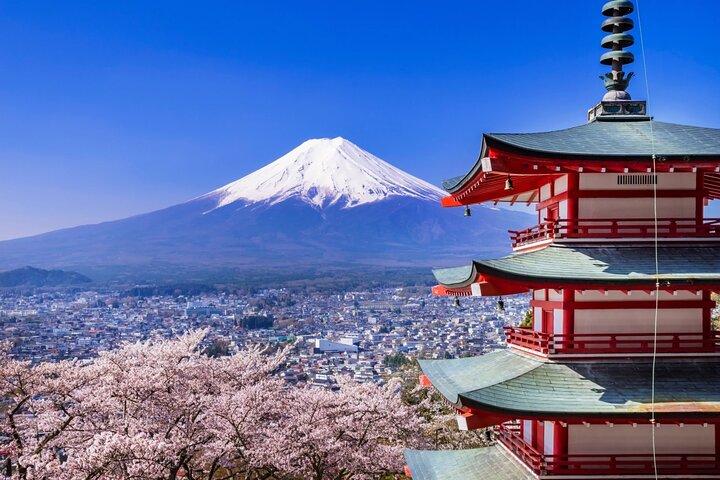
Mount Fuji Full Day Sightseeing Tour from Tokyo
From $54 · Price checked: Sep 2026
Best for: Travellers in Tokyo who want to see Mount Fuji without arranging trains and buses themselves.
Not for: Skip it if you plan to climb Mount Fuji, as this is a sightseeing day rather than a hike.
A full day sightseeing tour from Tokyo to Mount Fuji and its surroundings, organised as a single outing.
Check availabilityExternal booking on Viator · pricing and cancellations handled by Viator
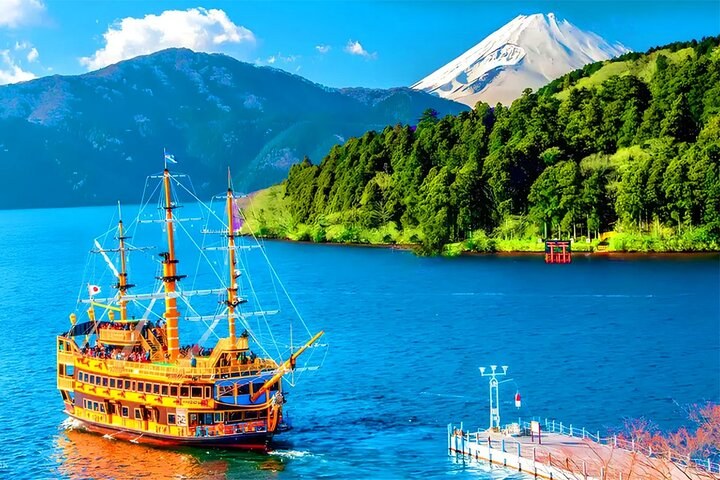
Tokyo: Mt. Fuji Cruise & Hakone Ropeway Day Trip by Bus
From $83.68 · Price checked: Sep 2026
Best for: Travellers who want the Hakone Ropeway and a boat trip near Mt. Fuji without arranging trains and transfers themselves.
Not for: Skip it if long coach rides or heights bother you, as the ropeway passes high over the Hakone hills.
A day trip by bus from Tokyo to the Mt. Fuji and Hakone area, combining a cruise with a ride on the Hakone Ropeway.
Check availabilityExternal booking on Viator · pricing and cancellations handled by Viator
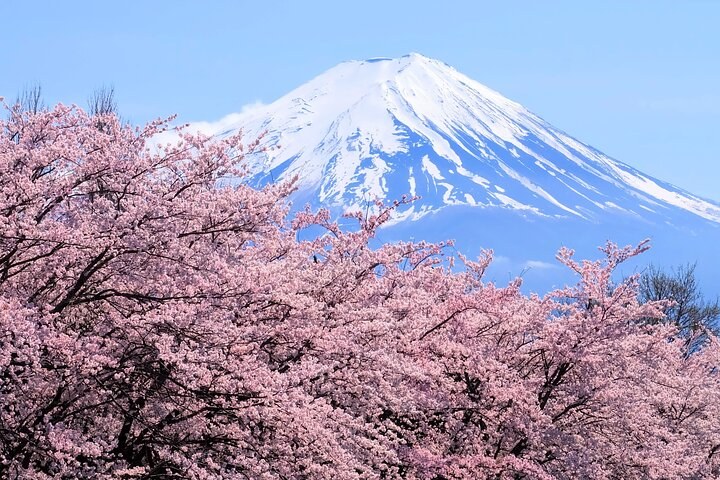
Mt Fuji and Hakone 1-Day Bus Tour Return by Bullet Train
From $159.92 · Price checked: Sep 2026
Best for: Travellers who want to see Mt Fuji and Hakone in one day without driving, with a bullet train ride back to Tokyo.
Not for: Skip it if cloud over Fuji would spoil the day for you, as the mountain views depend on the weather.
A full day bus tour from Tokyo to Mt Fuji and Hakone. The return journey to the city is by bullet train.
Check availabilityExternal booking on Viator · pricing and cancellations handled by Viator
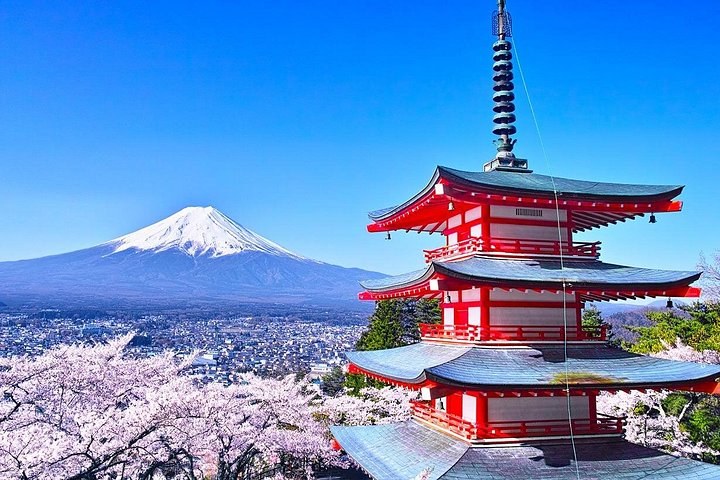
Mt. Fuji 5th, Oshino Hakkai, Onsen Full-Day Trip From Tokyo
From $55.22 · Price checked: Sep 2026
Best for: Travellers who want Mt. Fuji views, the Oshino Hakkai ponds and a hot spring soak in one day out of Tokyo.
Not for: Skip it if public bathing makes you uneasy, or if you want to climb Mt. Fuji rather than visit the Fifth Station.
A full day trip from Tokyo to the Fifth Station on Mt. Fuji, the spring fed ponds of Oshino Hakkai and an onsen for a hot spring bathe.
Check availabilityExternal booking on Viator · pricing and cancellations handled by Viator
Explore More
Related comparisons and guides:
Frequently Asked Questions
Can I do Hakone without a tour?
Yes. The Romancecar leaves from Shinjuku, and one Hakone Free Pass covers each stage of the loop, so a traveller who is comfortable with rail doesn't need a guide.
Which tour covers Mount Fuji without Hakone?
Two titles are Fuji-only: the Mount Fuji Full Day Sightseeing Tour from Tokyo, and the Fifth Station, Oshino Hakkai and onsen trip. Neither mentions the ropeway or Lake Ashi.
Is there a tour that returns to Tokyo by train instead of coach?
The Mt Fuji and Hakone 1-Day Bus Tour lists a bullet train as its return leg.
What should I check the night before a Fuji day?
Look at the live Fuji cameras and have a Hakone plan ready as a backup. A cloudy forecast is a reason to swap days, not to cancel your trip.
Where can I read official guidance on Japanese transport passes?
The Japan National Tourism Organization covers passes and regional access across the country. Hakone Navi covers Hakone transport and the ropeway specifically.
Written from Rome, Italy.