Paris vs Rome: Which City Wins on Day Trip Logistics?
We earn a commission when you book through our links on Viator (PID P00299531), at no extra cost to you. This is how we keep the site free. Learn more →
I Did Both and Here's What Nobody Tells You
The platform sign said "Tivoli" in small letters at the end of a corridor at Roma Tiburtina. I almost missed it. The Regionale was nearly empty — three locals, a woman with a dog, and me. By the time we reached Hadrian's Villa at 8 AM, the ticket office had not opened yet. I stood at the gate with a €2.60 regional ticket in my hand and waited for someone to unlock it. This is Rome: rewarding, but you have to find the small signs.
Paris is the opposite. According to the Office du Tourisme et des Congrès de Paris, the Métro has 308 stations across 16 lines, and Line 1 is fully automated. Most day-trip train stations — Gare Saint-Lazare, Gare de Lyon, Gare du Nord — are reachable within 30 minutes from central Paris on a single Métro line. The signage is enormous. The announcements are in French and English. The ticket machines take foreign cards. If you are visiting Paris for the first time, the transport system is doing half of your cognitive work for you.
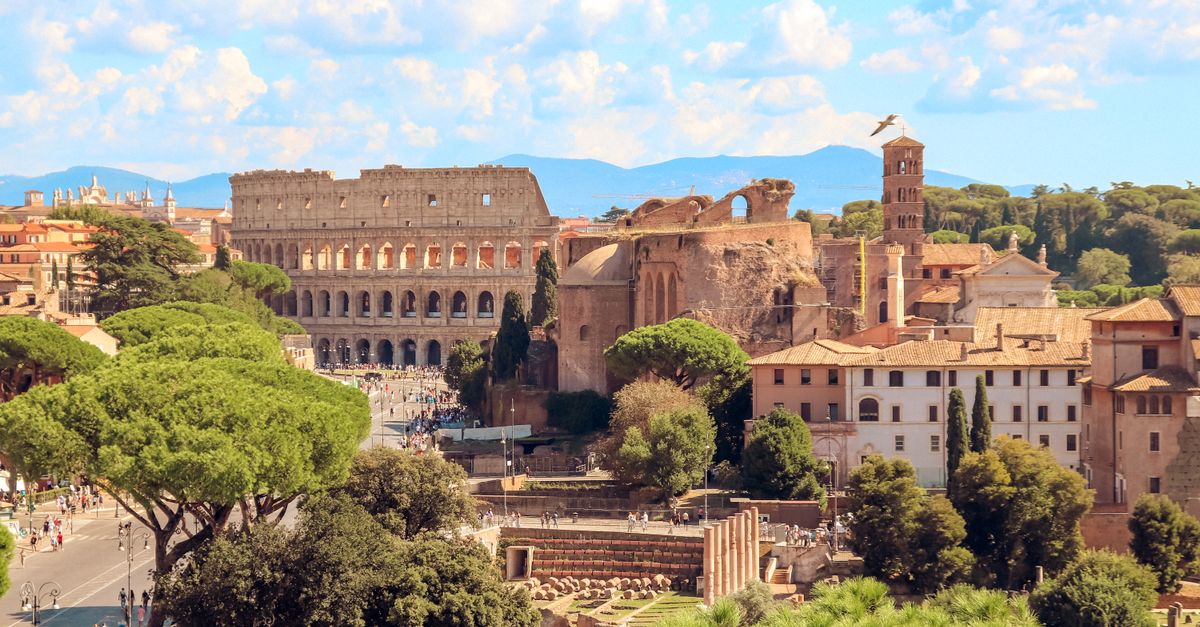
Skip this comparison if you want a general city-break guide. This is a logistics-focused assessment of how each city handles tours and day-trip access — not a beauty contest.
The first side of this comparison is a Paris evening city tour, the kind that takes you past the lit-up landmarks after dark. I have not personally booked this exact product, so I will speak to the category: Paris evening tours depart from a fixed central point, run on tight schedules, and move fast. The advantage is that you skip the daytime queues at the Eiffel Tower and the Louvre. The disadvantage is the same — you skip the queues because you are looking at them from a coach window, not walking through them.
Why Paris Nearly Won Me Over
What almost pushed me toward Paris was the sheer density of transport options. Gare Saint-Lazare alone sends trains toward Giverny, Versailles (Rive Droite), and Rouen. Gare de Lyon handles southeast France. Gare du Nord runs the Eurostar to London and Thalys to Brussels. Every direction has a high-frequency service. According to SNCF Connect, the train from Gare Saint-Lazare to Vernon takes 45 minutes, followed by a 15-minute shuttle to Monet's garden. That is a day trip you can plan on a napkin.
Compare this to Trenitalia: Tivoli is reached by regional train, so travelers at Tiburtina should follow signs for Regionale rather than Frecce. The Frecciarossa platforms are bright, modern, and obvious. The Regionale platforms are down a side corridor, behind a smaller sign. The trains are slower but cheaper — €2.60 from Termini to Tivoli, 50 minutes — and they actually go to Tivoli, whereas the Frecciarossa stops at a station that requires a connecting bus. Rome rewards the patient. Paris does not require patienc.
The other product worth naming is a Rome-based day experience, and I will be honest about what I can and cannot verify. I have not taken this specific tour, so I am treating it as a logistics question, not a quality judgment. What I can say is that Rome's day-trip ecosystem is dominated by coach tours that bundle the Vatican, the Colosseum, and the Catacombs into a single 8-hour circuit. The departure point is usually Termini or a hotel pickup. The price is usually higher than €60. The pace is usually relentless. If you are the kind of traveler who wants the Colosseum ticked off in 45 minutes so you can move on, this works. If you want to stand in the Colosseum long enough to read three inscriptions, this does not work.
The Moment I Made My Decision
7 AM on a Tuesday in October. I was standing at the top of Montmartre. The steps were empty. Artists were setting up easels, not selling. The basilica doors had just opened and the light through the dome was mine alone for 15 minutes. I had taken the first Métro from Châtelet — Line 4 to Château Rouge, then Line 12 to Abbesses — and walked up via the funicular. There was no queue for anything. The crêpe stand had not opened yet. I sat on a step and drank a coffee from a thermos like some kind of staged photograph.
This is the Paris I am comparing against the Rome I experienced at Tiburtina. And the honest answer is: timing matters more than the city. Paris loses this advantage for any traveler unwilling or unable to start sightseeing around 7 AM. By 10 AM, Montmartre is a coach tour conveyor belt. By noon, the basilica queue snakes down the hill. The empty steps I enjoyed were a function of discipline, not geography.
Rome has its equivalent. The Vatican at 7:45 AM on a Wednesday in February is a different building than the Vatican at noon on a Saturday in July. The difference is that Rome's quiet hours require more logistical planning — pre-booking skip-the-line tickets, knowing which entrance the early-access tour uses, accepting that some sites close on Monday or for feast days. Paris makes the early start easier because the transport system is faster. Rome makes the early start harder because you have to find the right platform, the right entrance, and the right ticket.
The decision came down to this: I would rather have Paris's transport efficiency and discipline myself into the early start than have Rome's quieter streets and fight the signage every time I wanted to leave the city center.
What I Wish I'd Known Before I Went
These are the things I learned the hard way, in no particular order:
Book Giverny tickets online. On-the-day queues can exceed 90 minutes from May through September. The garden is small, the paths are narrow, and the bottleneck at the entrance is severe. I watched a woman with a printed confirmation waltz past a queue of 60 people and felt both relieved and slightly guilty.
Avoid Giverny on Monday. Monet's house and garden are closed on Monday. I made this mistake once. I had a €40 train ticket, a shuttle bus ticket, and nothing to do when I arrived. The garden is open, but the house is not, and the house is the point.
Take the Métro to Gare Saint-Lazare, not a taxi. A taxi from the 6th arrondissement to Saint-Lazare at 7 AM costs €12 and takes 25 minutes in traffic. The Métro costs €2.15 and takes 12 minutes on Line 13. The taxi is a worse deal on every axis unless you have luggage you cannot carry.
At Tiburtina, ignore the Frecciarossa signs. Follow the Regionale signs instead. The Frecciarossa platforms are bright and obvious because they are designed for tourists. The Regionale platform is down a side corridor because it is designed for commuters. Tivoli is a Regionale destination. The train costs €2.60. There is no need to pay €11 for a Frecciarossa that stops at a station further from the villas.
Havebus cards separately. Rome's ticket machines have improved since 2022, but the Regionale ticket machines at Tiburtina still occasionally reject foreign Visa cards. I carry €20 in cash for exactly this reason. Paris machines are more reliable but not perfect — keep coins or a contactless card ready.
Monday closures hit Rome harder than Paris. The Vatican Museums are closed on Sunday except for the last Sunday of the month. The Colosseum has rotating closures. The Borghese Gallery requires advance booking. Paris has its closures too — the Louvre is closed on Tuesday — but the overall density of open sites means a Monday in Paris is still a productive day. A Monday in Rome during low season can feel like a ghost town.
If you are weighing an independent Tivoli trip against a guided option, the Tivoli day trip with Hadrian's Villa and Villa d'Este is one option worth comparing — but verify what is included (transport, entry fees, guide, lunch) before booking, because tour descriptions in this category vary widely. Independent travel is €2.60 each way plus €13 entry to Villa d'Este, which is the cheaper path if you can read the Tiburtina signs.
Skip the guided coach tour if poorly signed regional stations create a navigation problem for you. And skip Giverny on Monday if Monet's house is the reason you are going.
Photo Gallery

Tours Worth Comparing

Normandy D Day Beaches Tour from Paris with Lunch
A guided coach day trip from Paris to the Normandy D-Day landing beaches, with lunch and cider tasting included. Itinerary covers the key WWII sites in a single booking rather than the independent train-plus-rental route. Priced around $106 per person with a 4.96 average rating.
Check Availability →Normandy D-Day Small-Group Day Trip with Omaha Beach, Cemetery & Cider Tasting
A small-group day trip from Paris covering the Normandy D-Day beaches, including Omaha Beach, the American Cemetery, and a cider tasting. Coach transport and a guide are bundled into a single booking. Priced around $312 per person with a 4.85 average rating.
Check Availability →Day Trip from Rome: Pompeii and Amalfi Coast Small Group
A small-group day trip from Rome covering both Pompeii and the Amalfi Coast in a single booking. Combines the archaeological site and the coastal drive into one long day. Priced around $304 per person with a 5.0 average rating.
Check Availability →
Explore More
A small-group day trip from Paris covering the Normandy D-Day beaches, including Omaha Beach, the American Cemetery, and a cider tasting. Coach transport and a guide are bundled into a single booking. Priced around $312 per person with a 4.85 average rating.
Frequently Asked Questions
Is Paris or Rome better for day trips?
Paris wins on transport efficiency. The Métro reaches every major day-trip station in under 30 minutes, and high-frequency trains run to Giverny, Versailles, Chartres, and Reims. Rome has excellent day-trip destinations (Tivoli, Ostia Antica, Orvieto) but the regional stations are poorly signed and the trains less frequent. If logistics are your priority, Paris wins. If you are willing to navigate small platform signs, Rome rewards you with quieter streets and lower prices.
How much does a day trip from Paris to Giverny cost?
The train from Gare Saint-Lazare to Vernon costs around €15-20 each way depending on time of day and booking lead time. The shuttle bus from Vernon to Giverny is €10 round trip. Monet's garden entry is €12.50. Total independent cost is roughly €50-55 per person, not including food. Booking online saves the 90-minute queue that forms from May through September.
How much does a day trip from Rome to Tivoli cost?
The regional train from Termini to Tivoli is €2.60 each way. Hadrian's Villa entry is €13. Villa d'Este entry is €13. Total independent cost is roughly €44 plus transport within Tivoli. A guided tour typically runs €80-120 per person including transport and entry — verify what is included before booking.
Should I take an organized tour or travel independently?
Independent travel wins on price and flexibility in both cities. From Paris, the Métro and SNCF network are foreigner-friendly with English signage and card-accepting machines. From Rome, the Trenitalia regional network is cheaper but requires more navigation skill — you need to find the Regionale platforms at Tiburtina and read the smaller signs. If poorly signed stations are a problem, a guided tour is worth the premium.
When is the best time to avoid crowds in Paris?
7 AM to 9 AM on weekday mornings, October through March. The Métro opens at 5:30 AM, so you can be at Montmartre, the Louvre pyramid, or Notre-Dame's exterior by 7 AM with almost no competition. By 10 AM the coach tours arrive and the queues begin. Paris is quieter in November and February than in May, June, or September.
What should I avoid on Mondays in Rome?
The Vatican Museums are closed on Sundays (except the last Sunday of the month). Many smaller museums close on Mondays. The Colosseum and Forum are usually open but have reduced hours. Before booking a Monday in Rome, check each specific site. Paris also has Monday closures — the Louvre closes on Tuesdays, not Mondays — but the density of open sites means Mondays in Paris are still productiv.